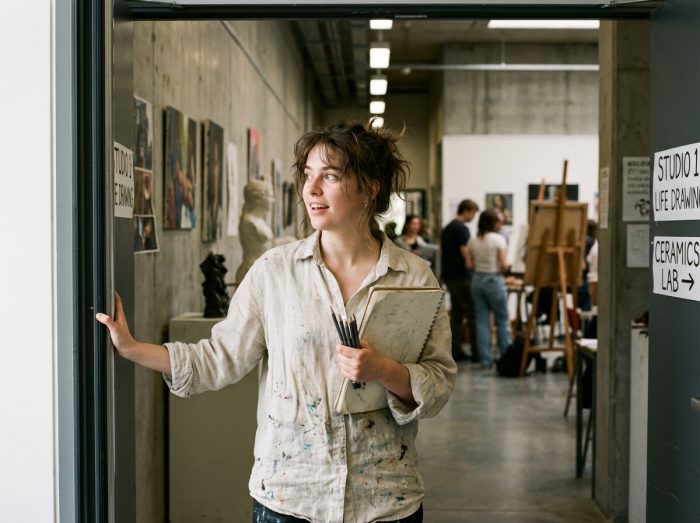
5,000 students out of 5,000: that’s the satisfaction score recorded in certain multidisciplinary art schools, a figure that stands out against the national average. This reality is clearly stated in the reports from the Observatory of Student Life. A dynamic driven as much by the richness of the activities offered as by the quality of individual support.
It’s impossible to overlook: well-being and mental health weigh heavily on academic success, especially where curiosity expresses itself through multiple disciplines. The teaching teams know this: supporting students means providing them with the necessary space to explore, create, and bounce back. Listening workshops, tutoring, psychological support—all converge towards the same goal: enabling everyone to pursue their desires to the fullest.
Why student well-being is central in a multidisciplinary art school
Walking through the halls of a multidisciplinary art school, one realizes that well-being is not just a buzzword. Here, it is the foundation of creation. The multiplicity of practices requires a reevaluation of how each individual projects, engages, and discovers themselves. Regardless of their age, students seek a place that welcomes both trials and missteps, flashes of genius and hesitations. The connections forged between students, the constant flow of ideas, and the meeting of different worlds become a true collective engine.
Choosing a multidisciplinary art school means betting on the freedom to progress at one’s own pace, on the recognition of multiple trajectories. The teachers, whether artists by nature or profession, ensure that the pressure for results does not stifle the desire to experiment. Workshops encourage self-assertion, taking risks, and cooperation. Here, well-being is built through exchanges, in the recognition of each journey, and in the attentive listening to everyone’s needs.
Some students share how these schools have transformed their confidence, pushing them to places they never thought they would go: completing a project, venturing into unknown territories, opening up to other creative approaches. This model proves its strength: among the advantages of multidisciplinary art schools, the ability to embrace all facets of artistic desires weighs heavily in the balance. The numbers speak for themselves: satisfaction and success rates exceed those recorded in more closed programs.
What practices promote a flourishing environment for creative minds?
In these schools that refuse to box students into a single category, the diversity of practices is present at every hour of the day. Painting, dance, digital arts, sound creation, writing, or applied sciences: all combinations become possible. This unpartitioned approach encourages exploration, idea confrontation, and the invention of unexpected bridges between disciplines. The transition from one practice to another nourishes both collective and individual creativity.
The golden rule: put everything on the freedom of experimentation. Students can build their own projects without fearing judgment from rigid hierarchies or technical constraints. Teachers support, stimulate exchanges, and offer both short workshops and long-term projects, solo or collaborative. School life is punctuated by key moments: open critiques, round tables, temporary exhibitions—so many opportunities to share and confront others’ opinions.
Here are some concrete practices that structure this creative daily life:
- Collaborative projects multiply intersections between arts and sciences, between generations, and between sometimes opposing universes.
- Transversality guides the approaches: a text can become an installation, transform into a performance, or a digital work.
- The relationship to materials, gestures, and ideas is affirmed every day as a true playground for exploration.
Through these experiences, a new way of learning takes hold: everyone can appropriate the school’s culture and shape their own path. Students advance by listening to their desires, driven by an environment where curiosity and plurality are celebrated, encouraged, and valued.
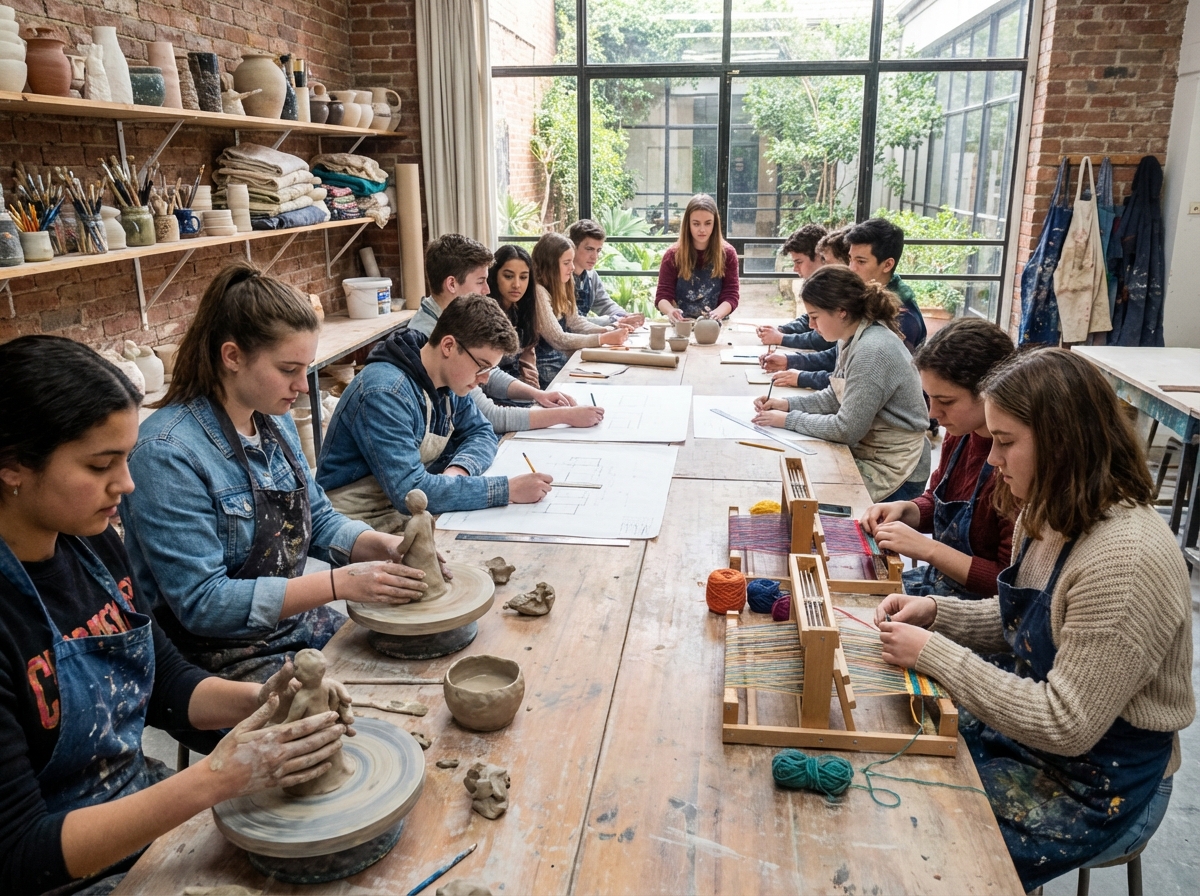
Support from educational staff: resources and initiatives to support each student
Support in these schools goes far beyond the simple transmission of knowledge. The educational staff builds a relationship of trust with each student, attentive to their needs and desires. Artists, teachers, and professionals come together to offer personalized follow-up that evolves throughout the training stages.
From the very first days, a mentor helps the student clarify their desires, dare to take risks, and cross disciplines. Listening is at the heart of daily life: every difficulty, every hesitation, is discussed during regular meetings. This presence helps prevent dropouts while also valuing every advancement, even the smallest.
To provide comprehensive support, several initiatives help students along their journey:
- Collective workshops on stress management, public presentation preparation, or acquiring suitable working methods.
- Psychological support and guidance initiatives, designed in direct connection with the artistic journey, to guarantee everyone a serene space for expression.
The school also offers a variety of documentary resources, shared workspaces, and encourages the sharing of experiences. The idea is to allow everyone, regardless of their background or progress, to find a listening ear and tools suited to their ambitions.
In these institutions, the guiding principle is clear: that each student can compose their own score without hindrance. The future belongs to those who dare to cross the threshold, explore, mix, invent, and make their curiosity an inexhaustible driving force.