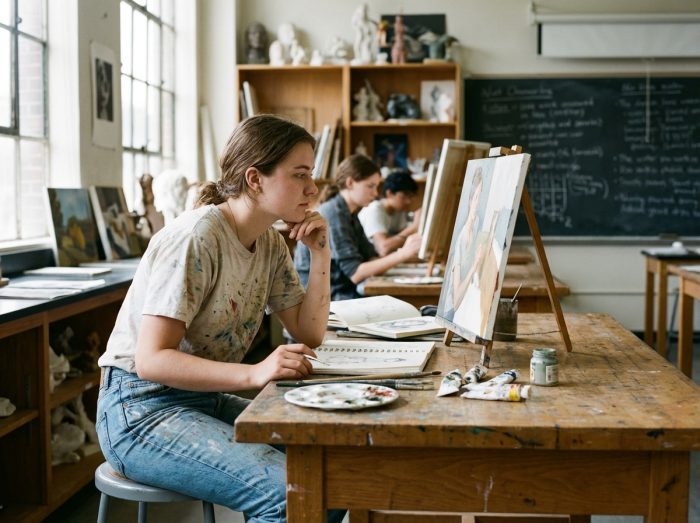
40%: this raw figure speaks of an entire generation moving forward without safety nets, where life after graduation resembles a blank page. Art schools fill their studios with young talents, but a large portion of them veer off, sometimes abruptly, from the paths laid out for them. These data from the Ministry of Culture remind us that leaving school guarantees neither stability nor a clear trajectory, but sometimes opens unexpected avenues where they were least expected.
When the professional project seems unclear: realities and challenges of an artistic career
As they leave the institution, uncertainty looms for many: how to outline a professional project in such a fluid environment? In France, educational policies promote the teaching of the arts, but this is not enough to dispel doubt. From the first year, students explore artistic residencies, cross disciplines and formats, and engage in hybrid practices. The notion of “creative profession” is constantly shifting, and the status of the artist oscillates between the desire for expression and confrontation with the art market.
Linear artistic careers are rare. It is emotion, aesthetic pleasure, reflection, and collective experience that mark the journey, far more than predefined stages. The artistic field exposes one to the unexpected, where other domains reassure with their clarity. The art school, far from providing recipes, invites doubt, experimentation, and divergence. Here, discipline gives way to freedom, and this laboratory also becomes a space for reflection on the artist’s place in today’s society.
Building one’s path in an art school is primarily about accepting the unexpected, trying, sometimes failing, and often starting over. Boldness prevails over method. Building a professional project through an art school means allowing oneself to seek one’s way, even if it means changing course, innovating, questioning norms, and confronting the complexity of the artistic world.
What paths to live off one’s art today? Testimonials and concrete resources
The artist’s studio is no longer just a closed space. On the contrary, creation opens up and invents itself elsewhere, driven by those who choose residency, mediation, or collective intervention. Artists like Estelle Zhong Mengual, Yves Henri, Éric Baudelaire, or Anne Lopez illustrate this movement: they create dialogue between the intimate and the collective, advocating for circulation between studios, public spaces, and institutions.
Art schools and training programs encourage this openness. Today’s paths are enriched by collaborations with museums, exhibition curators, and associative structures, from the Louvre to neighborhood workshops. The Ministry of Culture, the DRAC, or sponsorship support these first steps, offering resources that go beyond mere confrontation with the art market: project management, sustainable development, mediation—areas where the artist can engage.
Some resources to structure one’s activity
For those looking to settle in sustainably, several concrete options are available:
- Participate in open residencies and workshops, true grounds for collective experimentation
- Use social media as a showcase and laboratory to reach new audiences and share one’s approach
- Take advantage of short training sessions or internships, often offered by schools or local authorities
- Seek support from public institutions, whether from the ministry, DRAC, or museums
Testimonials vary, but one constant remains: the diversity of paths. Some turn to teaching, others engage in public space or commit to associative work. At every stage, the ability to invent, create connections, and become visible, especially through the web, conditions the possibility of living from one’s practice.
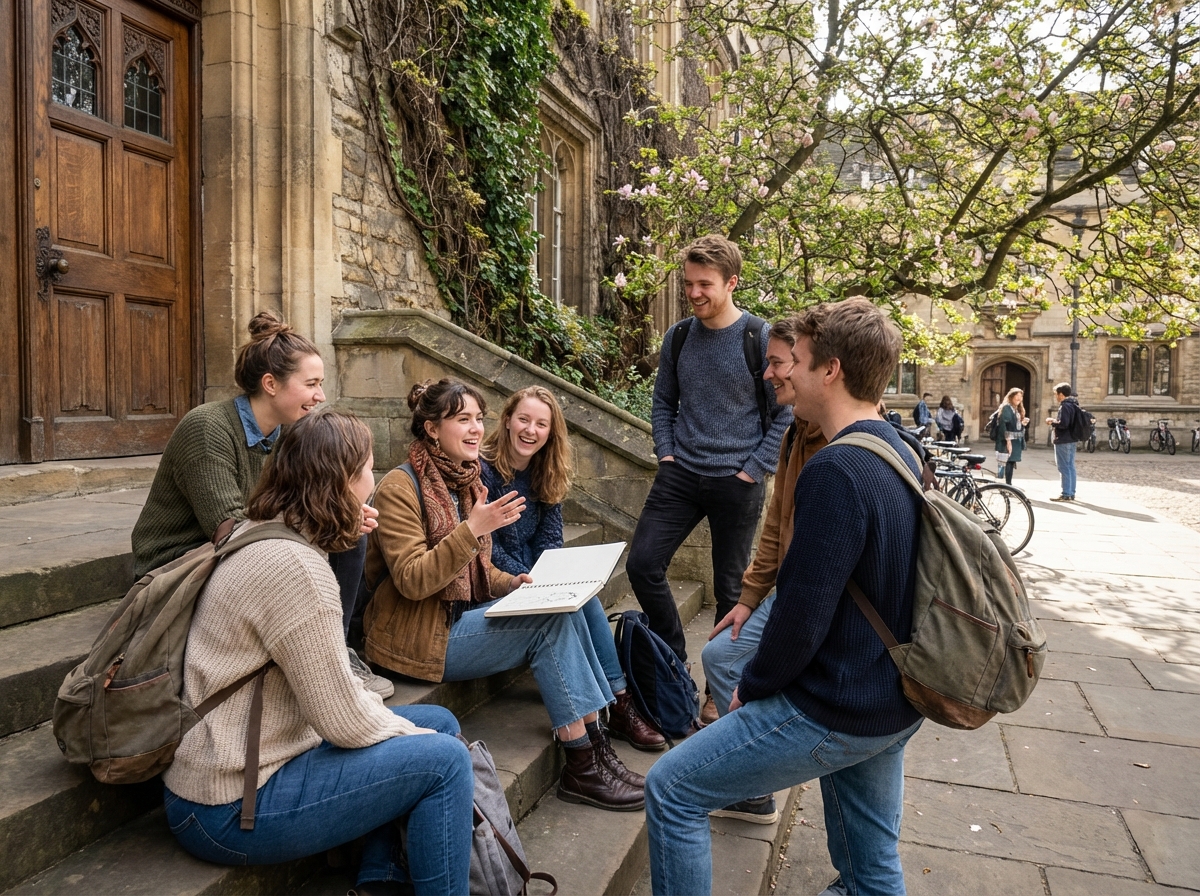
Creative retraining: inspiring paths to transform uncertainty into opportunity
In art schools, nothing is ever fixed. For many, initial doubt becomes a driving force: retraining then presents itself as a logical continuation, not as a renunciation. Forget the myth of the isolated creator: today, the artistic sector welcomes profiles from engineering, management, or the social field, all driven by the desire to link meaning and action. Creativity, far from being confined to the studio, becomes a tool for transformation.
Stories of retraining show that artistic training extends well beyond the realm of pure creation. We encounter former art school students who invest in local life, citizenship, heritage enhancement, or cultural mediation in hospital or prison settings. Estelle Zhong Mengual and Anne Lopez embody this movement: their approach transcends the strict framework of art to touch on social innovation, popular education, and sustainable development. Practicing art also means inventing new spaces of freedom and opening breaches in the social fabric.
Professional development in this sector is no longer limited to mastering a technique. Today’s artists learn to manage projects, communicate, and adapt to shifting networks. This versatility allows them to seize opportunities, whether it involves leading a workshop outside the walls, joining a residency, or intervening in a medical setting. The aesthetic experience, forged in school, finds its place in reality, serving society and its transformations.
At the end of their studies, it is not just about finding a job, but about inventing one’s own trajectory, accepting uncertainty as an opportunity: the chance to be able, tomorrow, to draw new territories of expression.