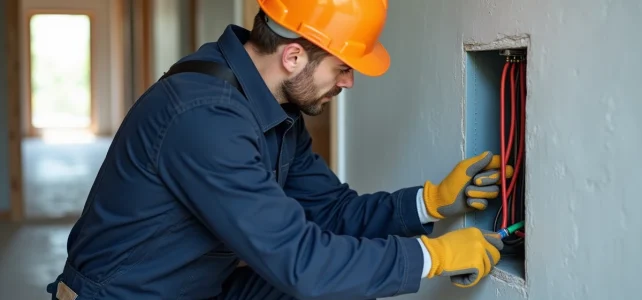
In France, the term R2V coexists with AR2V despite a technical difference that persists in supplier catalogs and regulations. The R2V cable, although ubiquitous in electrical installations, is not systematically compatible with all environments, particularly outdoors or in humid conditions.
Installation obligations, choice of sections, or distinction of conduits: selecting a cable like R2V involves adhering to specific requirements. Certain installation errors can lead to non-compliance or premature degradation of the electrical network.
Understanding the R2V cable and its essential uses in electrical installation
The R2V cable holds a prominent place in the realm of low voltage electrical installations, whether in homes or professional buildings. Its design, based on insulated copper conductors protected by a double PVC sheath, provides both strength and adaptability. This cable meets the requirements of power circuits for lighting, electrical outlets, and connection to the electrical panel. It thus covers numerous needs, from domestic installations to networks of collective or tertiary equipment.
The choice of cable section is never taken lightly: it is based on the power to be supplied and the constraints related to the voltage supported. Not all types of electrical cables offer the same level of service. The R2V is generally used under black PVC sheath or exposed, except in humid or buried environments without additional protection. This type of electrical cable withstands mechanical shocks and temperature variations without flinching, making it a reliable ally for the distribution of lighting and outlet circuits, whether in workshops, garages, or service rooms.
For those wishing to delve deeper into the subject, a comprehensive guide on the R2V cable presents a detailed analysis of uses, standards, and best practices for successful installation. Mastering these parameters ensures the safety and longevity of your electrical installations. The flexibility of the electric wire cable, the quality of the PVC sheath, the reliability of the copper conductor: every technical detail counts in the final result of a project.
R2V and AR2V: what are the differences for choosing your cable wisely?
Differentiating the R2V cable from the AR2V cable is a necessary step for any low voltage electrical installation. The R2V relies on copper conductors, a material valued for its strength and conduction performance. The AR2V favors aluminum, a choice that sometimes becomes necessary when weight and budget come into play.
The metal chosen for the conductor directly affects the cable’s capabilities. Copper, being denser, handles mechanical stresses better and guarantees superior conductivity. Aluminum, being lighter, requires a larger diameter to carry the same current intensity. This technical criterion impacts the sizing of the section and the ease of installation. In environments subjected to repeated mechanical stresses, the R2V stands out as a reliable and durable solution.
The PVC sheath protects both copper and aluminum from external aggressions, but the behavior against corrosion varies depending on the metal. With aluminum, connections require special attention: oxidation can quickly compromise contact quality. Choosing copper remains a safe bet for indoor distribution or circuits where reliability cannot tolerate any approximation. Conversely, aluminum finds its place in long-distance distribution networks, where the weight of the cable significantly impacts logistical considerations.
Comparing these two types of electrical cables is thus about balancing robustness, ease of handling, and cost constraints. Knowing the characteristics of each conductor well and analyzing the installation context: this is what allows for making the right choice without error.

Practical tips for a secure and durable installation of your electrical cables
Installing an R2V cable in an electrical installation requires method and foresight. First, prepare the layout, taking into account the characteristics of the circuits to be powered: from the electrical panel to the outlets, including lighting points. Relying on French safety standards, particularly NF C 15-100, ensures reliable protection for people and property.
Before proceeding with the installation, check the cable section: it must correspond to the length of the run and the required power to avoid any voltage drop. Certain passages require additional protection. Here are the situations concerned:
- Passing through partitions
- Passing in humid environments
In these cases, it is recommended to use an ICTA sheath or an appropriate PVC sheath to protect the electrical wires from shocks and limit the risk of overheating.
Installing a residual current circuit breaker effectively protects the network. It should be placed upstream of the circuit. Properly executed grounding remains the primary safeguard against insulation faults and the risk of electric shock. Connections must be firm but not excessive: overtightening can damage the wire, while insufficient tightening can create unwanted hot spots.
Finally, in domestic or tertiary installations, remember to label each cable with visible markers. This habit facilitates maintenance and limits errors during future interventions.
At every step, rigor pays off: a well-installed cable means a network that will stand the test of time. When it comes to electricity, it’s better to have an installation that holds up than to save a few pennies.