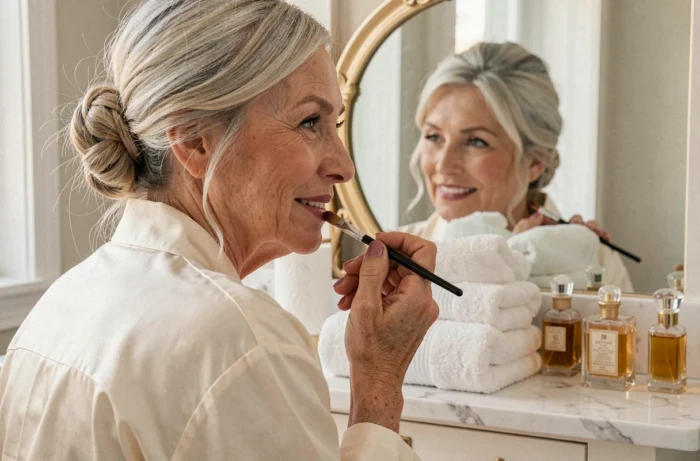
After 60, lips lose volume and natural hydration. Lipstick remains one of the most effective makeup gestures to bring radiance back to the face. However, it is essential to adapt its formula, shade, and application to a mouth that no longer has the same needs as at 30.
Hybrid makeup-care formulas: the real selection criterion after 60
The classic debate of “matte or satin” is no longer sufficient. In recent years, brands have developed hybrid lipsticks incorporating care ingredients: hyaluronic acid, panthenol, emollient oils. These formulas create a protective film on the lips while depositing color.
Why this shift? Because mature skin produces less sebum. Lips become drier, thinner, and more sensitive to external aggressions. A classic lipstick, even satin, can accentuate dehydration throughout the day.
Before purchasing, turn the tube over and read the ingredient list. The mention “moisturizing” or “nourishing” on the packaging must correspond to the actual presence of emollient agents in the formula. A tinted balm enriched with jojoba oil or shea butter will hold its promises better than a classic matte lipstick, even high-end.
To choose a lipstick at 60, this formulation criterion comes before the color itself.
Lipstick shades suitable for mature skin: what really works
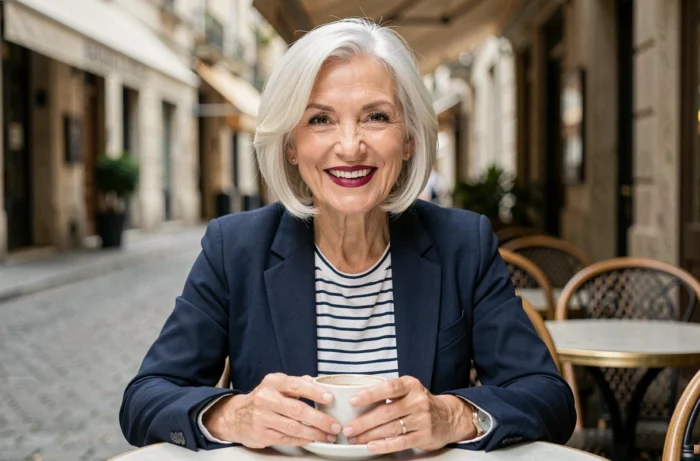
Have you ever noticed that a beautiful color on the display can harden the face once applied? This discrepancy becomes more pronounced with age because the contrast between the lip shade and the rest of the face evolves.
Shades that brighten the smile
Rosy shades, soft corals, and pink beiges remain safe bets. They bring freshness without creating too much contrast with the complexion. On fair skin, a tea rose or a rosy nude works particularly well.
On medium or dark skin, berry tones (warm red fruits) or rosy browns give a natural and luminous effect. The idea is to enhance the natural color of the lips rather than mask it.
Colors that can be problematic
Very dark reds (burgundy, dark plum) tend to visually shrink lips that have already lost volume. Bright orange shades can accentuate redness in the face.
This doesn’t mean they should be banned. A classic red applied well remains elegant at any age. The difficulty lies in choosing the undertone: a warm-based red (leaning towards coral) will flatter more than a cool-based red (leaning towards violet), which can give a harsh appearance.
Texture and longevity of lipstick: satin, cream, or tinted balm
The texture influences comfort as much as visual appearance. Here are the three families to know and what they concretely offer:
- Satin or cream: the best compromise between color and hydration. The slightly glossy finish visually fills in fine lines and gives a volumizing effect. Easy application, decent longevity.
- Tinted balm: ideal for a “naked but cared-for lips” effect. Less coverage, it suits days when you want to stay very natural. The wear is shorter, but comfort is maximized.
- Long-lasting liquid matte: to be handled with care. These formulas often dry out the lips after a few hours. If you insist on using them, apply a nourishing balm underneath and choose a version enriched with moisturizing agents.
A simple test in-store: apply the product on the back of your hand, wait a minute, then observe. If the finish cracks or pulls, it will do the same on your lips.
Applying lipstick at 60: the gestures that change everything
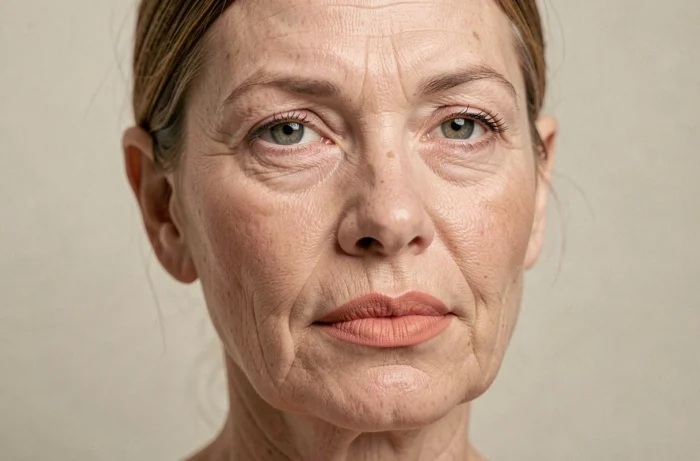
The color and formula only do half the work. The application determines the final result, especially when the lip contour begins to lose definition.
Preparing the lips before color
A gentle scrub once or twice a week removes dead skin and smooths the surface. Just before applying lipstick, a thin layer of moisturizing balm (left for a minute and then blotted with a tissue) creates a supple base. Hydrated lips hold pigments better and the result stays uniform longer.
Lip pencil, an underestimated ally
With age, lipstick tends to “bleed” into the fine lines around the mouth. A pencil in the same shade as your lipstick, applied all around the contour (and slightly blended inward), creates a natural barrier.
Choose a pencil with a creamy texture rather than a dry one. Too hard pencils pull on the fine skin of the lips and create a rigid line.
Apply in thin layers
A single thick layer moves and accumulates in the folds. It’s better to apply two thin layers, blotting with a tissue in between. This technique prolongs wear and avoids a “cakey” effect.
- First thin layer with a brush or directly from the tube
- Blot with a tissue to remove excess
- Second light layer to intensify the color
- Check the contour with a cotton swab if needed
Skin tolerance: a neglected criterion for sensitive lips
Dermatologists recommend prioritizing fragrance-free and hypoallergenic lipsticks for mature skin. The skin of the lips, lacking sebaceous glands, is more vulnerable to irritants than the rest of the face.
Reactions of dryness or tingling after application are not normal, even on mature lips. They often signal the presence of an irritating ingredient. If you experience recurring discomfort, switch brands rather than adding balm on top.
Lipstick after 60 imposes no restrictions on color or style. What changes is the perspective: the formula comes before the shade, preparation before application. A well-chosen and well-applied product transforms a smile in seconds, with no visible effort.