
In France, certain species of oak galls can host parasites, but no cases of serious human infection have been documented to date. However, the proliferation of galls on trees in urban or suburban areas regularly raises health concerns.
Direct contact with these growths is common among walkers, gardeners, and children. Basic precautions are sometimes recommended, although the actual risks to humans are considered low by most experts.
The oak gall, a phenomenon that intrigues more than it threatens
For those who linger in a thicket or walk along a path of old trees, the oak gall quickly catches the eye. These growths, sometimes round and hard like a wooden marble, are not a matter of chance. They appear following the laying of eggs by a tiny wasp, the cynipid wasp, on the branches, leaves, or acorns of oaks. The tree, in response to this intrusion, shapes these small protective balls around the larva that develops within, safe from predation.
The shapes vary depending on the species of wasp involved. Here are the most common silhouettes to know if you roam the forests or tend to an oak:
- The oak apple, the size of a hazelnut, caused by the wasp Biorhiza pallida.
- The walnut gall, formed by Andricus kollari, perfectly spherical and slightly larger.
- The lens gall, more discreet, which remains attached to the leaf by Neuroterus.
Adult oaks tolerate this coexistence very well, and their health only suffers during a massive invasion on very young subjects. Most of the time, we witness a demonstration of ecological balance between the tree and the insect. A curiosity, more than a problem for the arboretum or the surrounding forest.
What about the danger of oak galls for humans? Preconceived ideas and fears persist, yet science provides a completely different perspective. In everyday life, touching or handling these formations is not alarming. Only atypical uses, such as attempts to make one’s own dye or applying gall powder to the skin, have been known to cause temporary irritations. In the street, in the garden, or during a school outing, there is no proven risk, except for showing an uncommon creativity.
The risk to humans: should we be concerned?
It’s difficult to avoid rumors surrounding the oak gall. However, observations agree: human health is not threatened by simple contact with these growths. They can be collected, observed, and kept in a collection without particular apprehension. No serious incidents have been reported, neither today nor in past decades.
The only precautions advised are for those who would use raw galls or their powder in homemade preparations. The tannins and gallic acid present in high doses, useful for ferrous ink or vegetable dye, may cause localized itching if the powder is applied to the skin or in the eyes. But these situations remain marginal, confined to specific practices. Common exposure, such as during a walk, does not pose a concern for humans.
As for domestic animals: if a dog or horse were to swallow a large quantity of galls fallen to the ground, it could suffer from moderate digestive issues, diarrhea, or vomiting, caused by the high tannin content. But this situation is much rarer than the simple pleasure of sniffing a mossy trunk, and there is no indication of a direct risk to humans.
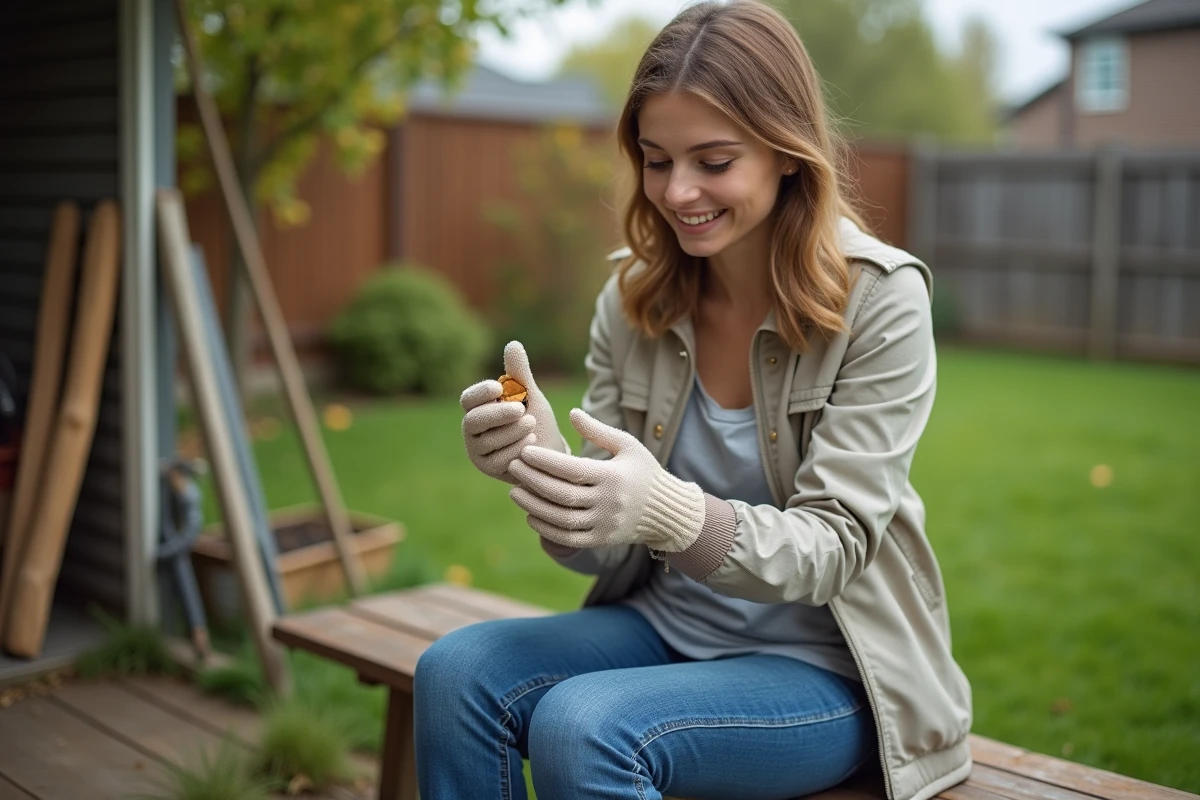
Simple precautions to limit any inconvenience
Discovering a gall along a path should not cause panic. However, those who regularly handle these growths, such as nature outing teachers, passionate gardeners, or DIY enthusiasts, will benefit from knowing some tips. The tannins, present in the gall, can be slightly irritating on sensitive skin after repeated handling. A quick hand wash after use is more than enough to prevent any discomfort, especially before touching one’s face.
The gall remains faithful to the oak and does not attack roses or any other trees in parks and gardens. Only the cynipid wasp joins the dance. However, one can prevent young children or curious animals from inadvertently ingesting them, as it is better to be cautious than to hope that curiosity goes unnoticed.
For those wishing to limit proliferation on their young trees, a few habits should be prioritized:
- Hand-prune the branches that carry numerous galls to reduce dissemination.
- Collect fallen growths and, if local regulations permit, proceed with their burning to break the parasite cycle.
- Encourage natural helpers: ladybugs, lacewings, predatory mites, or parasitoids, which naturally regulate the population of cynipid wasps without any chemical recourse.
The oak gall is only mysterious in its mechanics, not formidable in the rumor. During your next walk, in front of the tree that scatters its strange marbles in the wind or on the lawn, take a curious glance rather than a wary one. The unexpected belongs to nature, and these growths testify to its creativity more than a danger to flee.