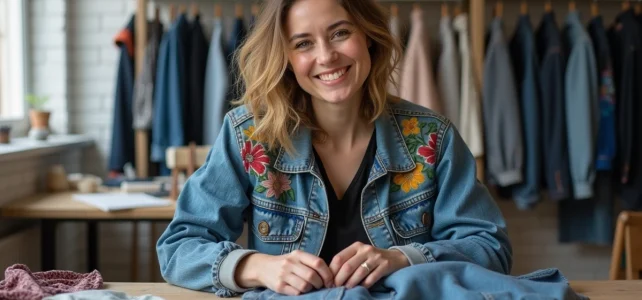
Every year, nearly 700,000 tons of textiles are thrown away in France, a significant portion of which remains unsold. Traditional clearance channels are no longer sufficient to absorb these growing volumes.
Some brands are now relying on innovative channels and unexpected partnerships to transform these dormant stocks. Several recent legal measures prohibit the destruction of unsold goods, disrupting the habits of the sector.
Why do so many clothes end up unsold? Understanding the issues of textile waste
Behind textile overproduction lies an unrelenting logic. In the face of the frenzy of fast fashion, the French market is overwhelmed with new products season after season. Each French person buys nearly 9.5 kg of clothing each year. Yet, the vast majority of used textiles still end up in household waste. A paradox, especially since the European figure already exceeds 11 kg thrown away per person per year.
This textile waste results from a persistent imbalance: the supply of new clothing far exceeds actual demand. Collections follow one another, trends succeed each other, and entire stocks remain on the hands of distributors. Producing more and more, at lower cost, leads to an accumulation of surplus that traditional channels struggle to sell. The result: managing unsold goods becomes a true logistical headache, and brands become mired in mountains of new, unworn clothing.
The environmental impact is massive: the global textile industry is responsible for 4 billion tons of CO2 each year. This model, based on the cycle of producing-consuming-throwing away, runs counter to the values of reuse and circular economy. In the face of this deadlock, there are tips for recovering unsold goods and giving them a useful role, instead of adding to the mountain of waste. For every garment diverted from the trash, we reduce the pressure on our resources and pave the way for more responsible fashion.
What concrete solutions are there to recycle or upcycle unused clothing?
In the face of textile waste, giving a new chance to unsold clothing is essential. Recycling and upcycling are emerging as concrete responses, centered around the collection, sorting, and transformation of textiles. To take action, start by dropping off your used clothing at collection points: Le Relais, Refashion, or various charitable associations manage these networks.
Here’s how these organizations operate to give a second life to collected textiles:
- Clothes in good condition are redistributed to people in precarious situations or resold in solidarity thrift stores.
- Damaged items are redirected to industrial recycling: they become rags, insulation for buildings, or are transformed into textile fibers for new uses.
- Direct donations remain simple and effective: Emmaüs, Secours Populaire, the Red Cross, and other associations collect clothing to meet immediate needs.
Repair is also gaining popularity. Recently, a repair bonus supported by the State and managed by Refashion allows individuals to receive between 6 and 25 euros to have a garment repaired by a seamstress or a certified workshop. This helps extend the life of jackets, pants, or sweaters without breaking the bank.
Upcycling opens up creative possibilities: some workshops transform shirts into bags, jeans into accessories. This local and inventive approach makes new from old, limiting the proliferation of textile waste. By multiplying these actions, everyone can reduce the environmental impact of their wardrobe and align their choices with an eco-responsible dynamic.
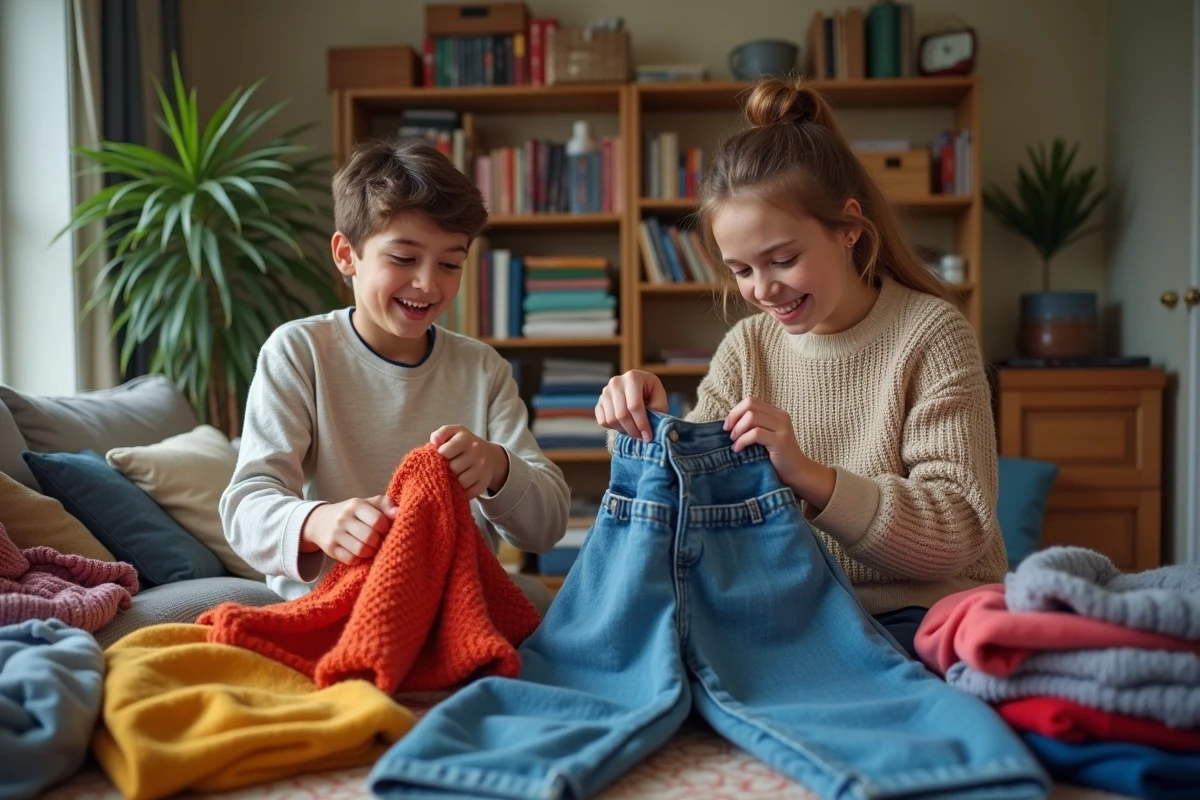
Creative and accessible ideas to give your clothes a second life
Stepping away from overconsumption also means rethinking how we view our clothes. There’s nothing more satisfying than giving a new function to a slightly worn pair of jeans, repurposing a faded shirt, or assembling fabric scraps to create a unique accessory. Upcycling, far from being reserved for experts, is accessible to everyone: a bit of imagination, thread, a needle, and sometimes a pair of scissors are all you need.
Home sewing is increasingly popular. A t-shirt becomes a bulk bag or a sturdy tote bag. Old sheets or leftover cotton are transformed into washable makeup wipes. Tutorials are multiplying online, driven by advocates of slow fashion and ethical fashion. This approach extends the lifespan of each piece and injects a new dynamic, far from industrial circuits.
Want to share this energy? Organize a clothing swap with your neighbors or colleagues. The exchange allows clothes to circulate while fostering connections. The sorting method inspired by Marie Kondo, focused on simplicity, encourages keeping only the essentials, giving away or transforming the rest. A concrete solution to lighten wardrobes and stimulate collective creativity.
For those who lack the time or desire to DIY, local sewing workshops are available. These professionals offer alterations, customizations, or even the creation of new pieces from old clothing. Textiles regain value, the carbon footprint of the wardrobe lightens, and local craftsmanship is celebrated.
In the face of the scale of textile waste, every action counts. A saved garment is a preserved resource and a step away from disposable fashion. By transforming, exchanging, and repairing, an entire system breathes differently, creating new from the real.